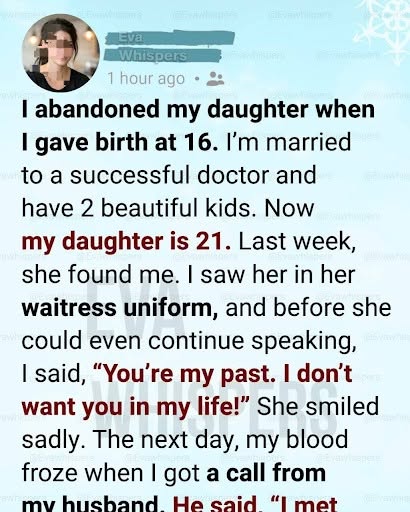
That’s a story-style clickbait headline, not a factual claim or something with a single “truth” behind it. It’s usually designed to pull emotions (regret, forgiveness, surprise) and make people click “see more.”
There’s no information in that line that can be evaluated scientifically or practically—it’s a narrative hook, often used in:
- social media storytelling posts
- fake “inspirational” or “drama” articles
- sometimes AI-generated content farms
Why these stories are so common
They rely on emotional patterns like:
- abandonment → regret → redemption
- conflict → separation → unexpected return
- guilt → forgiveness → reunion
These are powerful storytelling formulas, but they’re not evidence of anything real happening in a specific case.
Reality check
- No names, context, or verifiable details are provided
- The story could be fictional, exaggerated, or entirely made up
- It’s designed for engagement, not information
If you want, I can:
- break down whether a full story like this seems realistic or fabricated
- or show you how to quickly spot AI-generated or fake emotional posts like this online