Knowing if an avocado is safe to eat is mostly about ripeness + spoilage signs. Here’s a simple, reliable guide:
🥑 1. Check the color (but don’t rely on it alone)
- Hass avocado (most common):
- Green → not ripe yet
- Dark green/black → usually ripe
- But color alone can be misleading depending on variety.
✋ 2. Gently press it
- Slightly soft when pressed → ready to eat ✔️
- Hard as a rock → unripe
- Very mushy or collapsing → overripe (may be spoiled)
🍂 3. Check the stem
- Flick off the small stem cap:
- Green underneath → good to eat ✔️
- Brown underneath → overripe
- Difficult to remove + dry inside → unripe
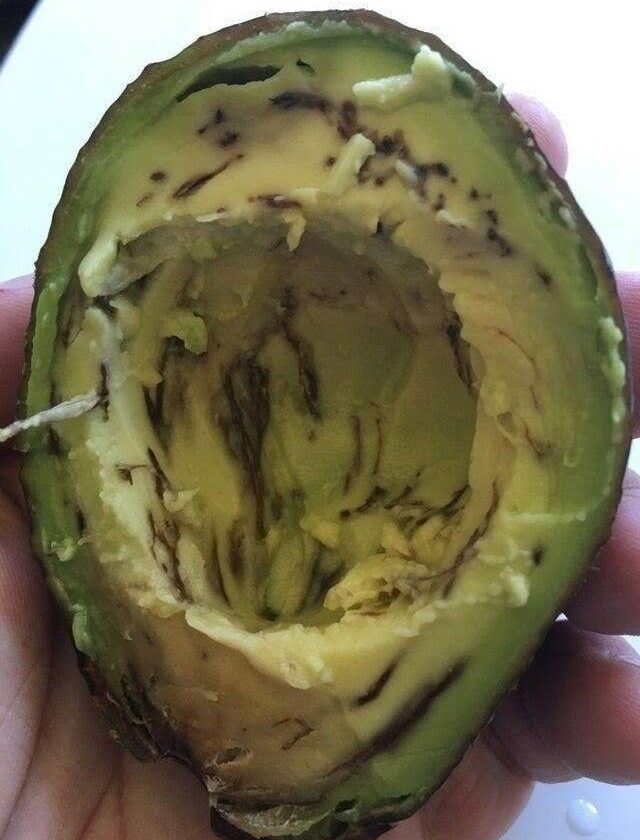
⚠️ 4. Look inside (after cutting)
- Normal: green to pale yellow flesh
- Small brown spots: usually safe (just remove them)
- Large brown/black areas: overripe, bitter taste likely
🚫 5. Signs it is NOT safe to eat
Discard if you notice:
- Strong sour or rotten smell
- Mold (fuzzy growth inside or outside)
- Very slimy or watery texture
- Completely black flesh throughout
🧠 6. What about browning?
- Brown avocado after cutting is usually oxidation, not spoilage
- It’s still safe if it smells normal
- Just scrape off or mix it
🥑 Bottom line
A good avocado is slightly soft, green inside, and smells fresh. If it smells bad, looks moldy, or is extremely mushy → throw it away.
If you want, I can also show you how to ripen avocados quickly in 1–2 days without ruining them.