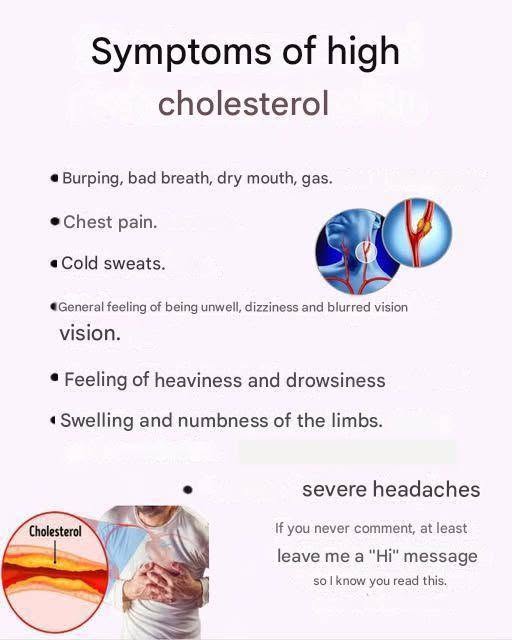
That line is mostly accurate as a warning-style headline, but it needs context so it doesn’t sound scarier than it is.
🫀 High Cholesterol: The “Silent” Risk
High cholesterol is often called “silent” because:
- It usually has no obvious symptoms
- You can feel completely normal while it builds up in your blood vessels
But over time, it can contribute to:
- 🫀 Heart disease
- 🧠 Stroke
- 🩸 Blocked arteries
🧬 What actually happens in the body
Cholesterol isn’t automatically bad—it’s a fatty substance your body needs. The problem starts when:
- LDL (“bad” cholesterol) is too high
- HDL (“good” cholesterol) is too low
- Fat deposits slowly build up in arteries (plaque)
This process is called atherosclerosis.
⚠️ Does it really have “no signs”?
Most people feel nothing early on. However, in advanced stages, possible warning signs may include:
- Chest pain or pressure (especially during activity)
- Shortness of breath
- Fatigue during exertion
- Pain in legs while walking (poor circulation)
But by the time symptoms appear, the condition may already be advanced.
🧪 How you actually find it
The only reliable way is:
- A blood test (lipid profile)
That’s why regular checkups matter even when you feel fine.
🥗 What helps lower cholesterol
Evidence-based habits:
- Eating more fiber (fruits, oats, vegetables)
- Reducing trans fats and processed foods
- Regular physical activity
- Maintaining a healthy weight
- Sometimes medication (if prescribed)
🧠 Bottom line
High cholesterol isn’t “mysterious” or unpredictable—it’s silent but measurable, and it becomes dangerous mainly when it goes unchecked for years.
If you want, I can break down:
- Foods that lower LDL naturally
- Or a simple cholesterol-friendly meal plan
- Or explain the difference between good vs bad cholesterol in an easy way