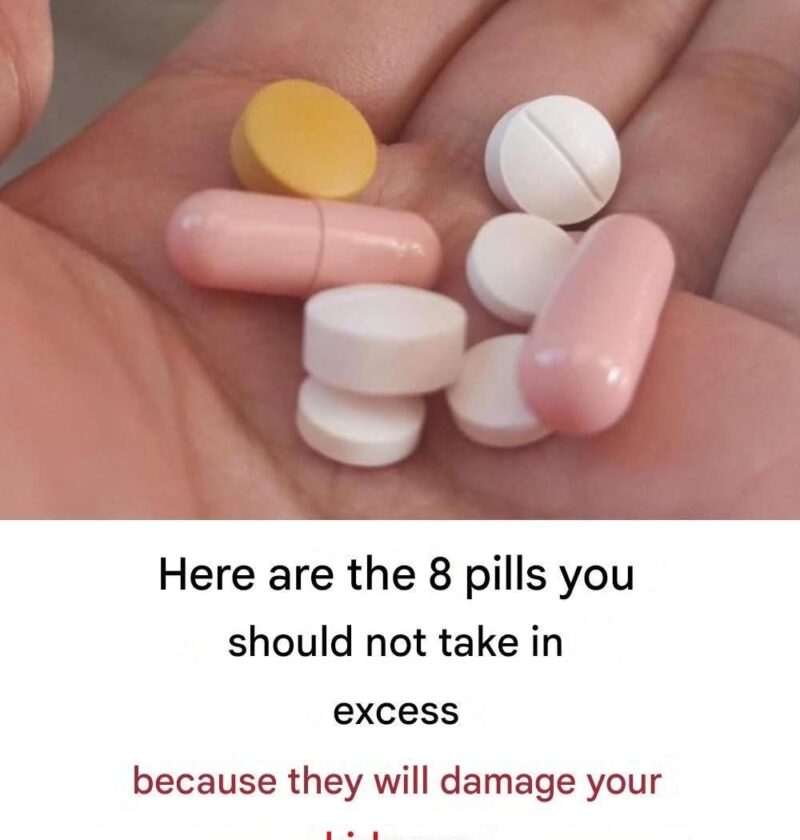
That headline is another clickbait health claim. It sounds scary, but it’s misleading because it suggests a fixed list of “8 pills” that universally damage kidneys—which isn’t how medicine works.
The truth:
Kidney risk depends on:
- the specific drug
- dose and duration
- your hydration and health condition
- whether you already have kidney disease
There is no universal “8 pills list” that is always dangerous for everyone.
🧠 Medications that can affect kidneys (when misused or in high risk situations)
1. NSAIDs (most important group)
Examples:
- ibuprofen
- naproxen
- diclofenac
⚠️ Can reduce blood flow to kidneys if used:
- in high doses
- for long periods
- or in dehydration / kidney disease
2. Certain antibiotics (rare but possible risk)
- gentamicin
- vancomycin (in higher doses or special cases)
3. Contrast dye (used in scans)
- not a “pill,” but can stress kidneys in high-risk patients
4. Some blood pressure meds (context-dependent)
- ACE inhibitors / ARBs
These are usually protective long-term, but need monitoring in some cases.
5. Diuretics (“water pills”)
- can affect kidney function if dehydration occurs
🚨 Important reality check
- These medicines are commonly safe when used correctly
- Millions of people take them without kidney damage
- The real risk comes from misuse, overdose, or existing kidney disease
❗ What clickbait posts get wrong
- They turn “possible risk in certain conditions” into “always dangerous”
- They ignore dosage and medical supervision
- They create unnecessary fear of normal medications
🟢 Bottom line
It’s not about “pills to avoid,” but:
using the right medication, in the right dose, for the right person
If you want, I can tell you which everyday painkillers are safest for kidneys or how to use them responsibly without risk.