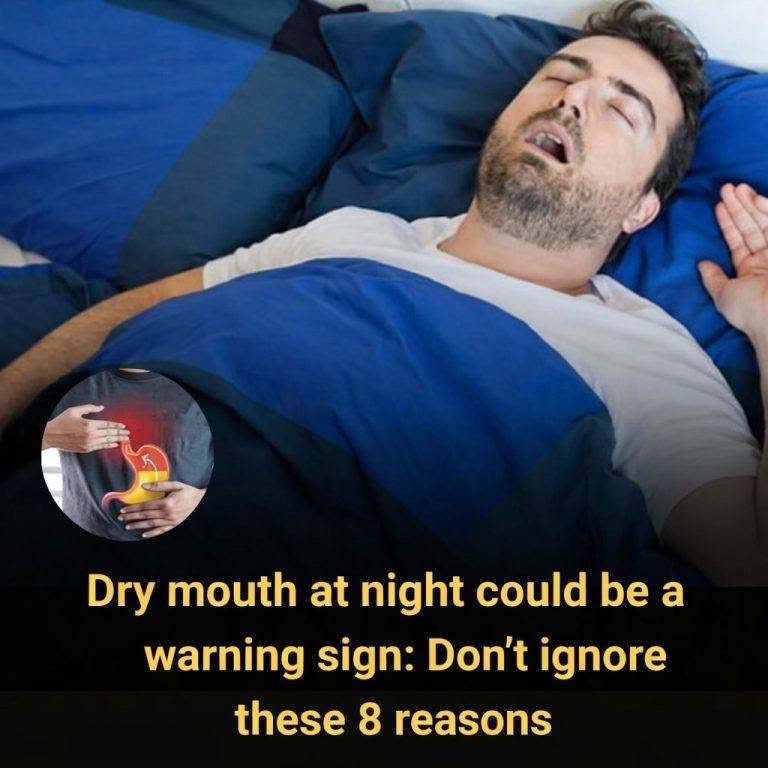
That headline is partly informative but also a bit sensationalized. Dry mouth at night is common and often harmless, but persistent dry mouth can sometimes point to an underlying issue.
🌙 Common causes of dry mouth at night
- Sleeping with your mouth open
- Nasal congestion or allergies
- Dehydration
- Side effects of medications (a very common cause)
- Smoking or vaping
- Dry indoor air
⚠️ Signs that persistent dry mouth deserves attention
1. Frequent thirst
Needing water constantly, especially at night.
2. Difficulty swallowing
Food may feel harder to swallow without enough saliva.
3. Bad breath
Saliva helps control bacteria in the mouth.
4. Increased cavities
Dry mouth can raise the risk of tooth decay.
5. Sore throat on waking
Especially if you breathe through your mouth while sleeping.
6. Burning or irritated tongue
Some people experience a burning sensation or sensitivity.
7. Changes in taste
Food may taste different or less flavorful.
8. Cracked lips or mouth sores
Reduced saliva can make the mouth tissues more vulnerable.
🧠 When to see a healthcare professional
Consider medical or dental advice if:
- Dry mouth is frequent or severe
- It started after beginning a medication
- You have increasing dental problems
- It is accompanied by other symptoms such as significant fatigue, unexplained weight loss, or excessive daytime thirst
Persistent dry mouth can sometimes be associated with conditions such as Type 2 Diabetes or Sjögren syndrome, though these are far from the most common causes.
✔️ What may help
- Drink enough water during the day
- Treat nasal congestion if present
- Use a humidifier in a dry room
- Avoid alcohol-containing mouthwashes before bed
- Discuss medication side effects with your doctor if relevant
Bottom line
Occasional dry mouth at night is common. The concern is persistent dry mouth, especially if it’s causing dental problems, difficulty swallowing, or other ongoing symptoms. In those cases, it’s worth getting evaluated rather than relying on viral “warning sign” lists.