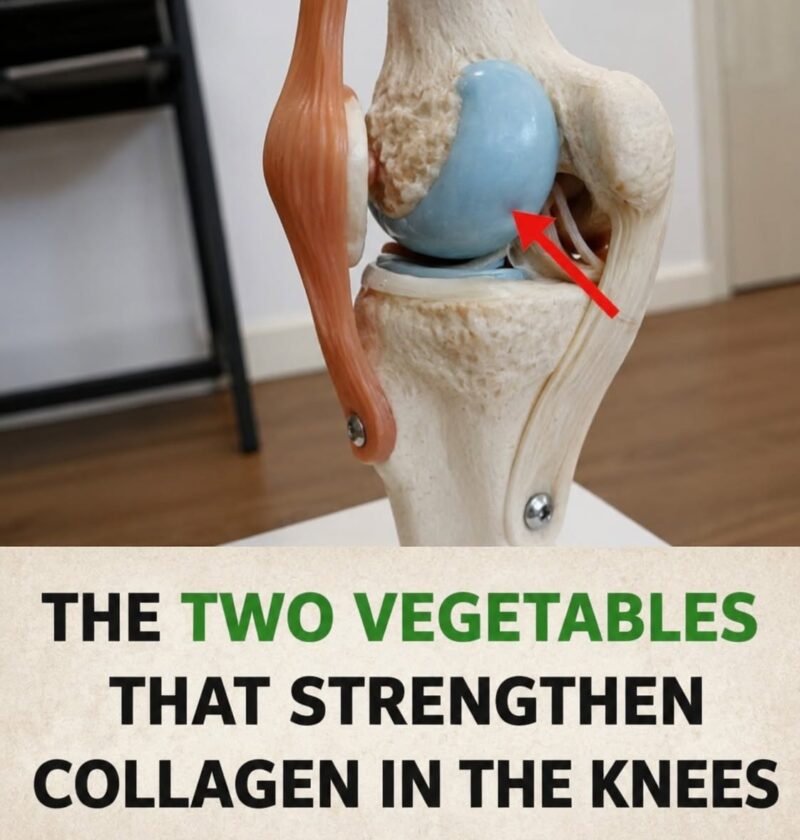
That headline is classic clickbait.
There are no two vegetables that “increase collagen in the knees” or quickly relieve joint pain in a targeted, medical way. Collagen in joints doesn’t work like that—your body builds and maintains it based on overall nutrition, age, genetics, and joint health.
🦴 What is true
Some vegetables can support joint health indirectly by reducing inflammation and providing nutrients your body uses for tissue repair.
🥦 Vegetables that support joint health (not “miracle collagen boosters”)
- Broccoli
Contains vitamin C and compounds that support cartilage health and may reduce inflammation. - Spinach and leafy greens
Provide antioxidants and vitamin K, which are linked to bone health. - Bell peppers
High in vitamin C, which your body uses to help make collagen. - Carrots and other colorful vegetables
Contain antioxidants that help reduce oxidative stress in joints.
🧠 Important reality check
- You don’t “eat collagen into your knees” directly.
- Collagen production depends on protein intake + vitamin C + overall diet.
- Joint pain is usually related to:
- wear and tear (osteoarthritis)
- inflammation
- injury
- body weight and activity level
⚠️ Why these posts are misleading
They:
- exaggerate normal nutrition science
- imply “fast fixes” for chronic conditions
- use authority phrases like “doctors are surprised” without evidence
✔️ What actually helps joint pain
- Regular low-impact exercise (walking, swimming)
- Maintaining a healthy weight
- Adequate protein + vitamin C intake
- Medical treatment if arthritis is present
🧾 Bottom line
Vegetables are good for joint health, but no vegetable specifically rebuilds knee collagen or cures joint pain quickly.
If you want, I can give you a real evidence-based diet plan for arthritis or knee pain relief support.