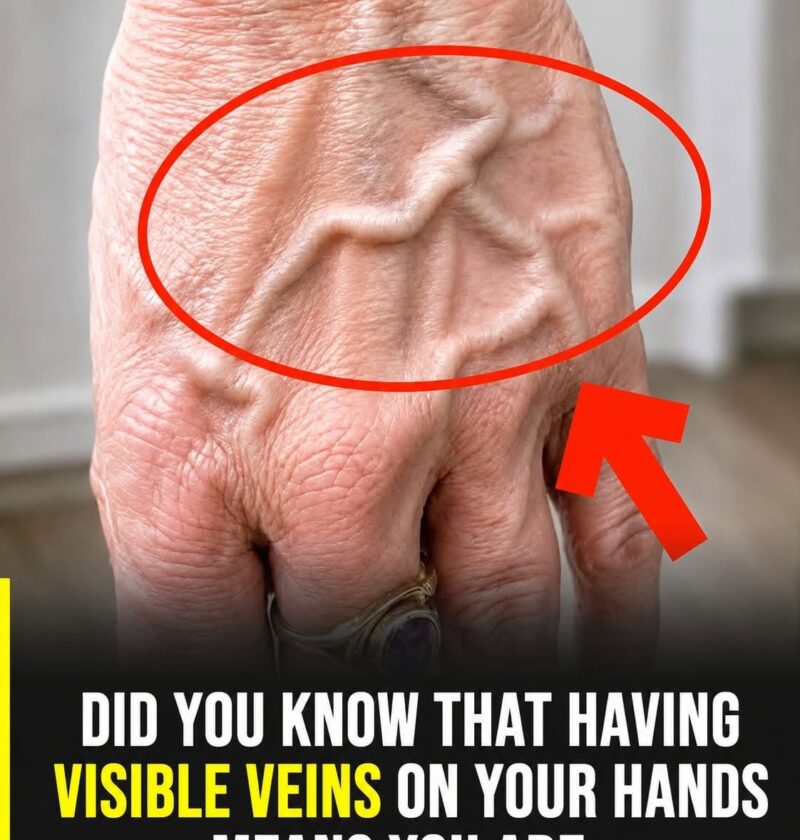
That headline is clickbait. The missing ending is usually something dramatic like “dehydrated,” “at risk of disease,” or “healthier than everyone else,” but visible veins by themselves don’t mean any of those things.
Why veins are visible
For many people, visible veins are completely normal and can be due to:
- Genetics
- Thin or fair skin
- Lower body fat
- Exercise (veins become more prominent temporarily)
- Warm weather (veins expand)
- Aging (skin becomes thinner over time)
When visible veins might need medical attention
Visible veins are worth discussing with a healthcare professional if they are accompanied by:
- Pain or tenderness
- Swelling
- Redness or warmth
- Sudden appearance of a swollen, hard vein
- Skin ulcers or significant skin discoloration
These symptoms could indicate a vein problem that needs evaluation.
What visible veins do not automatically mean
They are not a reliable sign of:
- Cancer
- Poor circulation
- Vitamin deficiency
- High blood pressure
- A specific disease
Bottom line
For most people, visible veins are a normal variation in appearance, not a warning sign of illness. The headline is designed to create curiosity and concern, but it oversimplifies a feature that is usually harmless. If you have new or painful vein changes, it’s reasonable to have them checked, but visible veins alone are typically nothing to worry about.