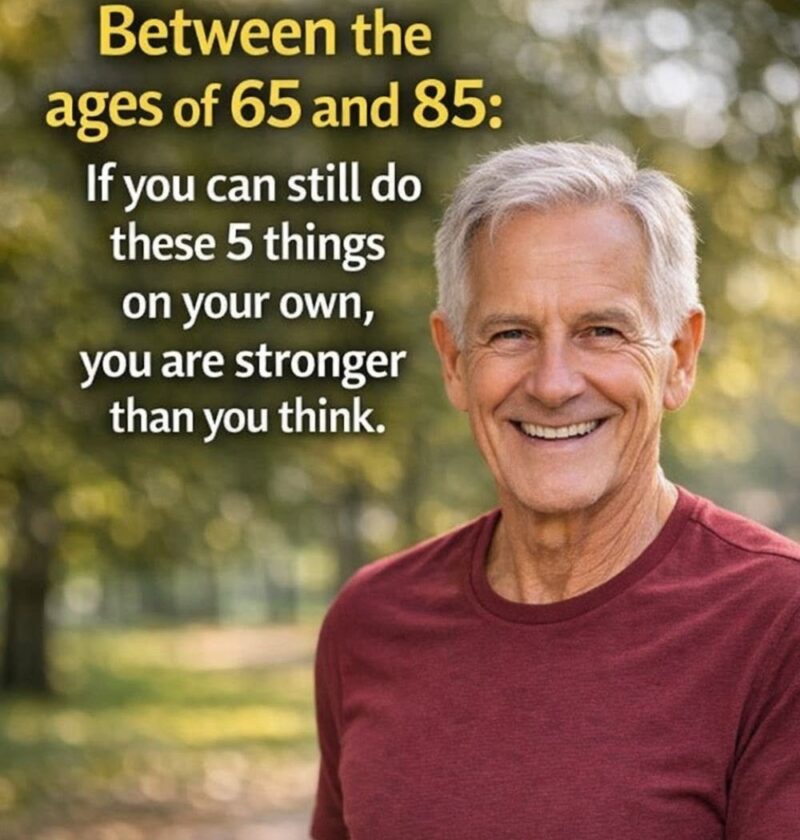
That headline is motivational clickbait, not a medical assessment. There is no scientific rule that says being able to do “5 specific things” proves you are “stronger than most people” in a meaningful or standardized way.
However, in geriatrics, doctors do use everyday abilities to estimate functional independence, which is a better indicator of health than age alone.
Common abilities linked to independence
If someone aged 65–85 can do the following on their own, it generally suggests good functional health:
- Walk and move around safely (without frequent falls or assistance)
- Get dressed and bathe independently
- Prepare meals and manage daily household tasks
- Handle medications correctly
- Manage money, shopping, and basic planning
These are part of what healthcare professionals call activities of daily living (ADLs) and instrumental activities of daily living (IADLs).
What it actually means
Being able to do these things usually indicates:
- Good muscle strength and balance
- Reasonable memory and cognitive function
- Adequate vision and coordination
- Lower risk of dependency in daily life
But it does not mean someone is “stronger than others” in a competitive sense—just that they are maintaining independence well for their age.
Important context
A person’s ability can vary widely based on:
- Chronic conditions (arthritis, heart disease, diabetes, etc.)
- Physical activity level
- Nutrition and sleep
- Social support
- Access to healthcare
Some people with health conditions may still live independently, while others without major illness may need assistance.
Bottom line
If someone older can manage daily life tasks independently, that’s a positive sign of health and autonomy—but headlines that rank people as “stronger than others” are oversimplified and not medically meaningful.
If you want, I can list the 5 specific tests doctors actually use to measure functional strength and aging health more objectively.