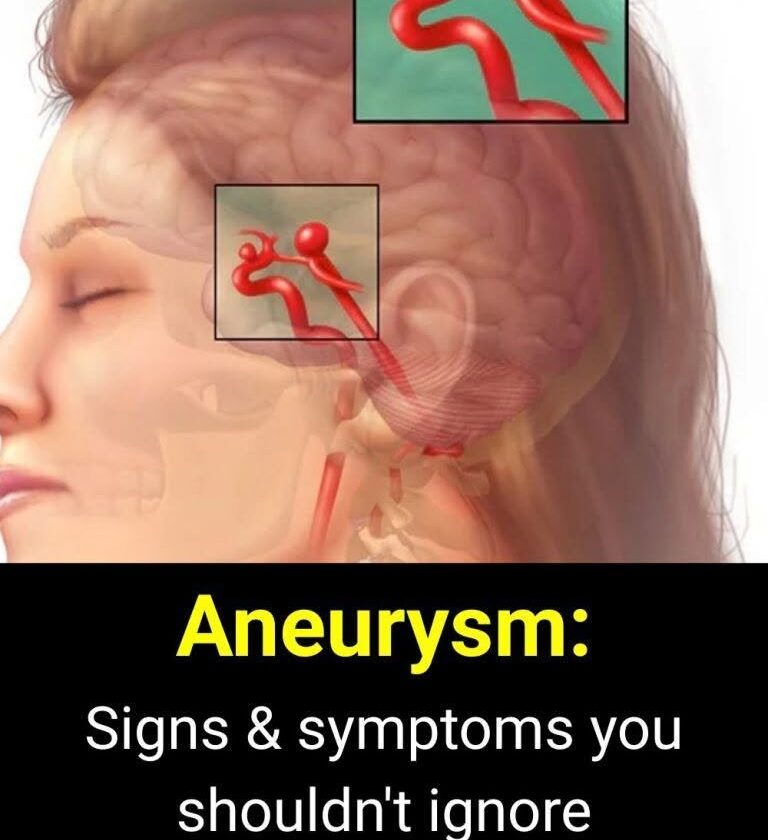
The headline “Aneurysm: Signs you shouldn’t ignore… See more” is intended to grab attention. While aneurysms can be serious, many social media posts oversimplify or exaggerate the warning signs.
Here’s what is actually known:
An aneurysm often causes no symptoms
Many aneurysms are discovered incidentally during imaging for another reason.
Symptoms depend on where the aneurysm is
- Brain aneurysm (unruptured):
- May cause no symptoms.
- Sometimes causes pain behind an eye, a dilated pupil, vision changes, or numbness/weakness on one side of the face.
- Brain aneurysm (ruptured): This is a medical emergency.
- Sudden, severe headache (“the worst headache of my life”)
- Nausea and vomiting
- Stiff neck
- Sensitivity to light
- Confusion, seizures, or loss of consciousness
- Abdominal aortic aneurysm:
- Often has no symptoms.
- May cause persistent pain in the abdomen, back, or side.
- A ruptured aneurysm can cause sudden severe pain, dizziness, fainting, and shock.
When to seek emergency care
Call your local emergency services immediately if someone has:
- A sudden, extremely severe headache unlike any they’ve had before.
- Sudden collapse or loss of consciousness.
- Severe chest, back, or abdominal pain with fainting or signs of shock.
Not every headache or backache is an aneurysm, but these combinations of symptoms warrant urgent evaluation.
If you have the full “See more” post or a screenshot, I can help determine whether its claims are accurate or misleading.