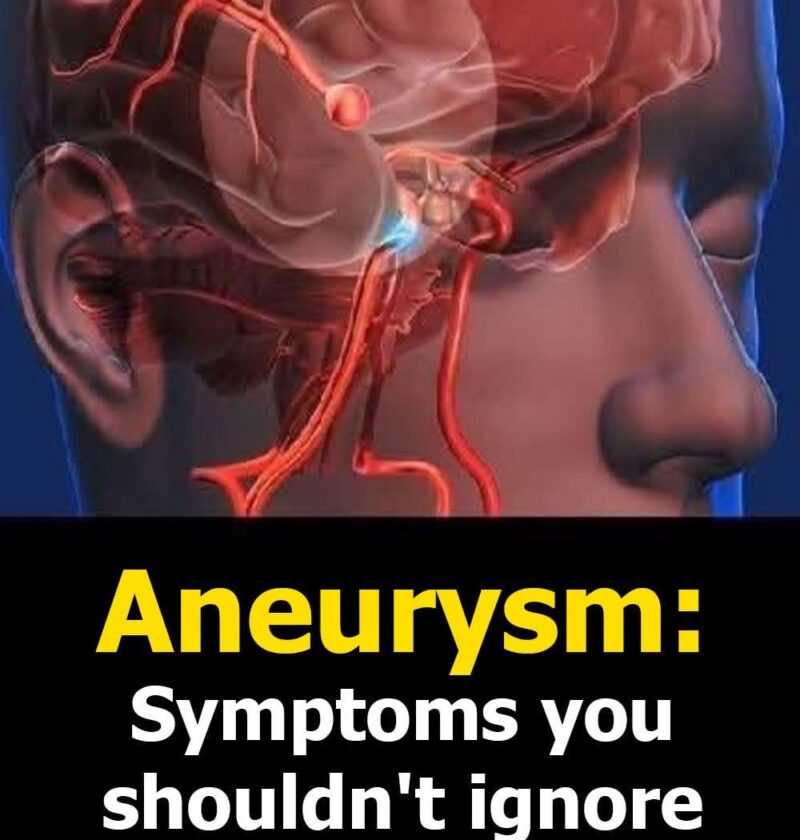
That’s a clickbait health teaser, but the condition it refers to is real.
An Aneurysm is often silent until it becomes large or ruptures, so most “everyday symptom lists” online are oversimplified or misleading.
When aneurysms do cause warning signs
1. Sudden, severe pain (most important)
- “Worst headache of your life” (brain aneurysm rupture)
- Sudden chest, back, or abdominal tearing pain (aortic aneurysm)
2. Neurological symptoms (brain involvement)
- Sudden vision changes
- Drooping eyelid
- Slurred speech or confusion
- Loss of consciousness
3. Pulsating feeling (sometimes abdominal)
- A strong pulse in the abdomen may occur in some cases
4. Dizziness or fainting
- Can happen if bleeding affects blood flow
5. Shock symptoms (emergency)
- Rapid heartbeat, weakness, collapse
Reality check
- Most aneurysms have no symptoms at all before rupture
- Mild headaches, fatigue, or dizziness are not reliable signs
- Diagnosis usually requires medical imaging (CT, MRI, ultrasound)
When it’s an emergency
Seek urgent care if there is:
- Sudden severe headache
- Sudden chest/back/abdominal pain
- Fainting or collapse
- Sudden neurological changes
Bottom line
These posts mix real emergency signs with vague symptoms to create fear. Aneurysms are serious—but not something you can reliably detect from general everyday sensations online.
If you want, I can explain who is actually at higher risk and what causes aneurysms, which is much more useful than symptom lists.