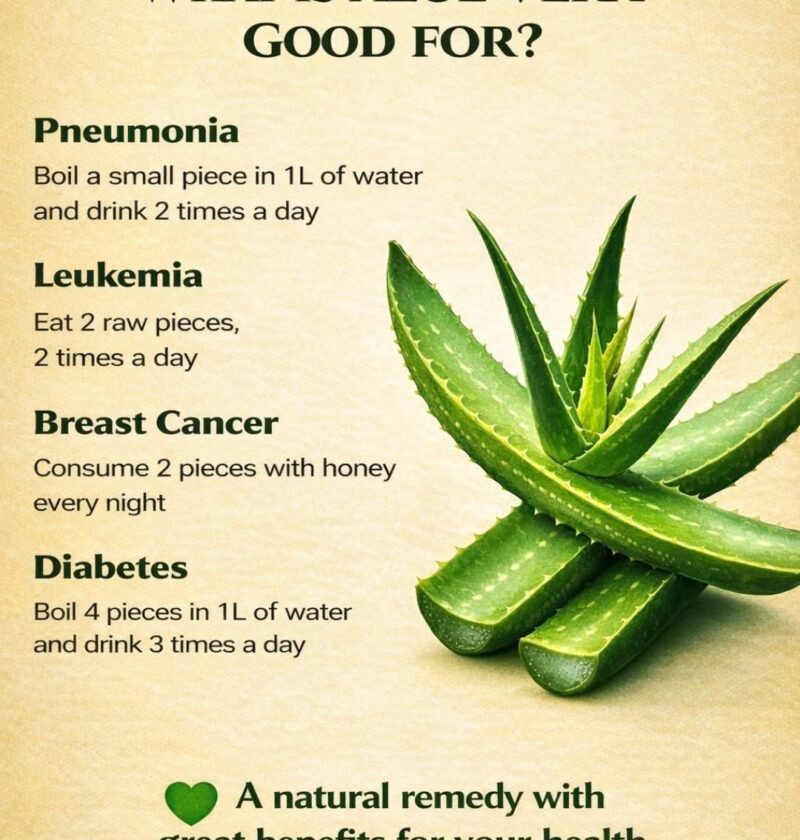
That headline is mostly marketing language, but aloe vera juice is a real thing—with some real uses and some exaggerated claims.
🌿 What aloe vera juice actually is
It’s a drink made from the inner gel of the aloe vera plant, usually:
- diluted with water or juice
- sometimes filtered and sweetened
🧃 Simple safe way to prepare aloe vera juice (at home)
🧾 Ingredients
- 1 fresh aloe vera leaf
- Water (1–2 cups)
- Optional: lemon juice or honey for taste
👩🍳 Steps
- Wash the leaf thoroughly
- Cut off the thorny edges
- Slice it open and scoop out the clear gel
- Avoid the yellow latex layer (it can be irritating)
- Rinse the gel well in water
- Blend 1–2 tablespoons of gel with water
- Add lemon or honey if desired
- Drink fresh (don’t store too long)
⚠️ Important safety notes
- The yellow latex (aloin) can cause diarrhea and cramping
- Large amounts may upset the stomach
- Not recommended for:
- pregnant or breastfeeding people
- people with certain digestive conditions
- long-term daily use without medical advice
🧠 What it may help with (mild effects)
Some people use aloe vera juice for:
- Hydration support
- Mild digestion relief
- Skin hydration (indirectly)
But evidence is limited, and it is not a cure for diseases.
🚩 What is exaggerated online
Claims like:
- “detoxifies the body”
- “cures all stomach problems”
- “boosts immunity dramatically”
These are not strongly supported by medical evidence.
✔️ Bottom line
Aloe vera juice can be a mild, refreshing drink when prepared correctly, but it’s not a miracle health solution. Proper preparation (especially removing the latex) is important for safety.
If you want, I can show you who should NOT drink aloe vera juice and why, since that’s where most people get surprised.