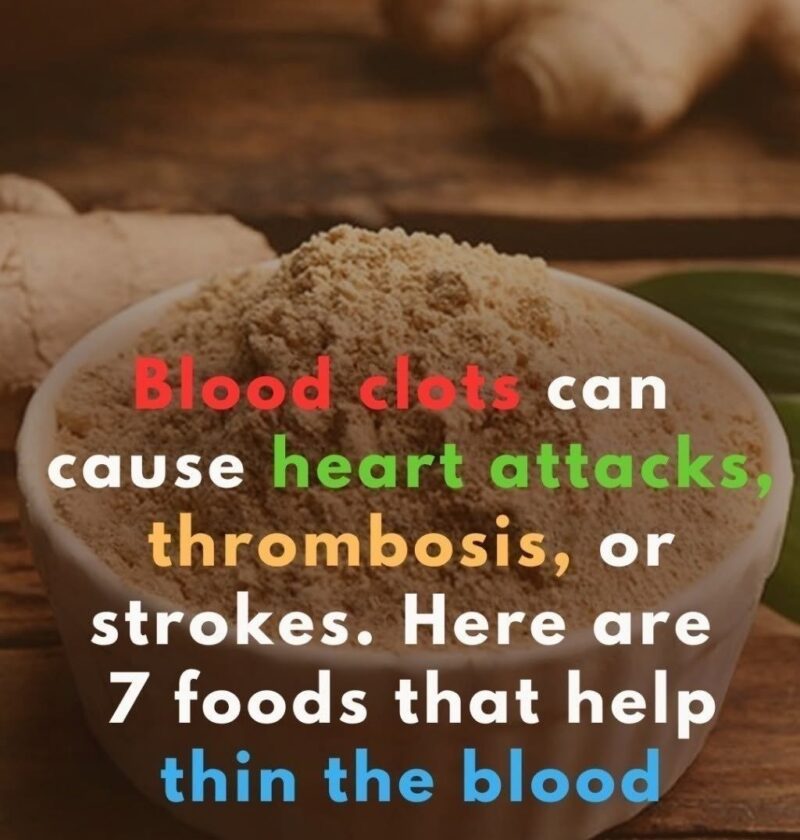
That headline is partly true but potentially misleading. Some foods contain compounds that can slightly affect blood clotting or platelet function, but they do not work like prescription blood thinners and should not be used as a substitute for medication.
Examples include:
- Garlic – May have a mild effect on platelet function.
- Ginger – Contains compounds that may modestly reduce platelet aggregation.
- Turmeric – Its active ingredient, curcumin, may have mild anticoagulant effects in laboratory studies.
- Salmon – Rich in omega-3 fatty acids, which can have a small effect on blood clotting.
- Walnut – Contains omega-3 fats.
- Flaxseed – Another source of omega-3 fats.
- Blueberry (and other berries) – Contain compounds that may support cardiovascular health, though they are not blood-thinning medications.
Important cautions
- If you’re taking prescription blood thinners such as Warfarin, Apixaban, or Rivaroxaban, talk to your healthcare professional before making major dietary changes or taking concentrated herbal supplements.
- Normal culinary amounts of these foods are generally safe for most people, but large amounts or supplements may increase bleeding risk in some individuals.
Bottom line
These foods may have modest effects on blood clotting or cardiovascular health, but they are not a replacement for prescribed anticoagulant or antiplatelet medications. Headlines suggesting they are “powerful blood thinners” tend to overstate the evidence.