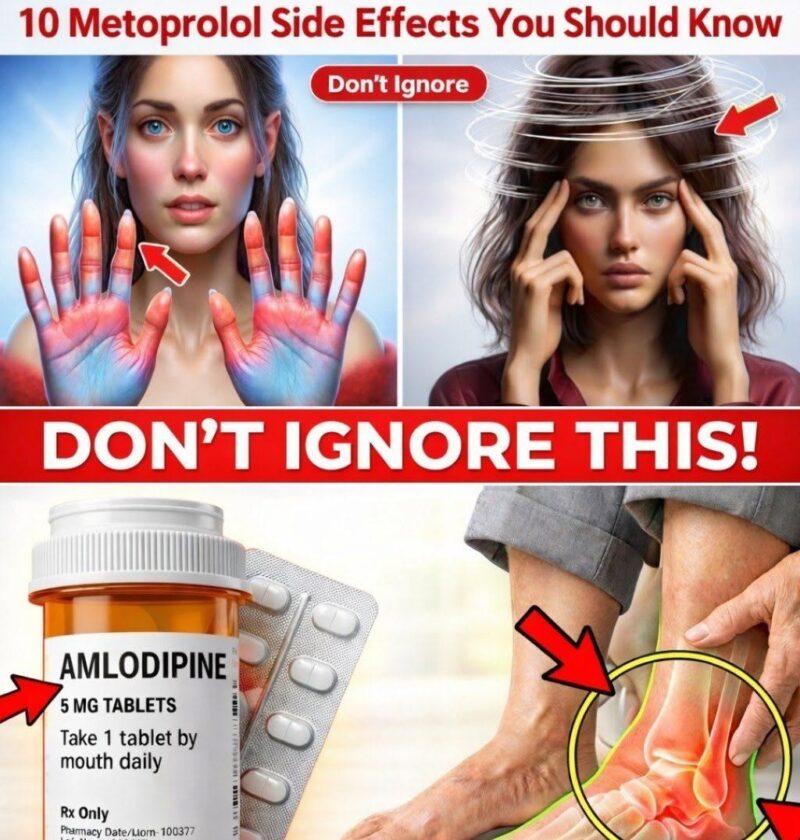
That headline is clickbait. Doctors are not “praying you don’t discover” medication side effects—they’re expected to explain the important risks and benefits so you can use the medication safely.
Metoprolol is commonly prescribed for:
- High blood pressure
- Certain heart rhythm disorders
- Chest pain (angina)
- Heart failure
- After a heart attack
Common side effects
- Fatigue or tiredness
- Dizziness or lightheadedness
- Slow heart rate
- Cold hands and feet
- Headache
- Mild nausea or diarrhea
- Trouble sleeping or vivid dreams (in some people)
Less common but more serious side effects
- Very slow heartbeat
- Fainting
- Shortness of breath or wheezing (especially in people with asthma)
- Swelling of the legs or sudden weight gain
- Severe allergic reaction (rare)
Important safety tips
- Do not stop metoprolol suddenly. Abruptly stopping it can increase the risk of chest pain, abnormal heart rhythms, or even a heart attack. If it needs to be stopped, your healthcare provider will usually reduce the dose gradually.
- Take it exactly as prescribed and let your healthcare provider know about all other medications you’re taking, since some can interact with metoprolol.
- Contact your healthcare provider if you have persistent or bothersome side effects, and seek emergency care if you experience severe symptoms such as chest pain, fainting, or difficulty breathing.
For many people, the benefits of metoprolol—such as lowering the risk of serious cardiovascular events—outweigh its potential side effects. If you’re taking metoprolol and have concerns about how it’s affecting you, it’s best to discuss them with the clinician who prescribed it rather than stopping it on your own.