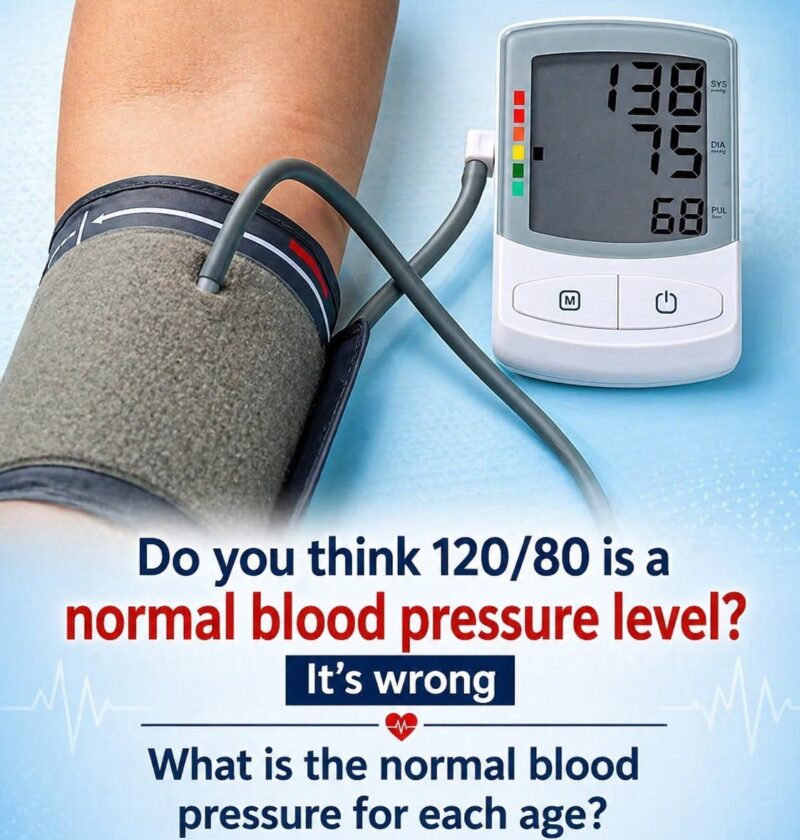
This headline is somewhat misleading because it implies that there is a different “normal” blood pressure for each age group.
A more accurate version would be:
Understanding Healthy Blood Pressure: What the Current Guidelines Recommend
According to current medical guidelines, normal blood pressure for most adults is not based on age. Instead, the categories are generally:
- Normal: Less than 120/80 mm Hg
- Elevated: Systolic 120–129 mm Hg and diastolic less than 80 mm Hg
- High blood pressure (hypertension): 130/80 mm Hg or higher (depending on the guideline and clinical context)
While blood pressure often increases with age, that does not mean higher readings become “normal” or ideal. Healthcare providers may individualize treatment goals for older adults based on overall health, frailty, and other medical conditions, but the definition of healthy blood pressure is not simply adjusted upward because someone is older.
The headline isn’t necessarily wrong, but it can reinforce the common misconception that “higher blood pressure is normal for your age.” Current evidence emphasizes maintaining healthy blood pressure throughout adulthood whenever safely possible.