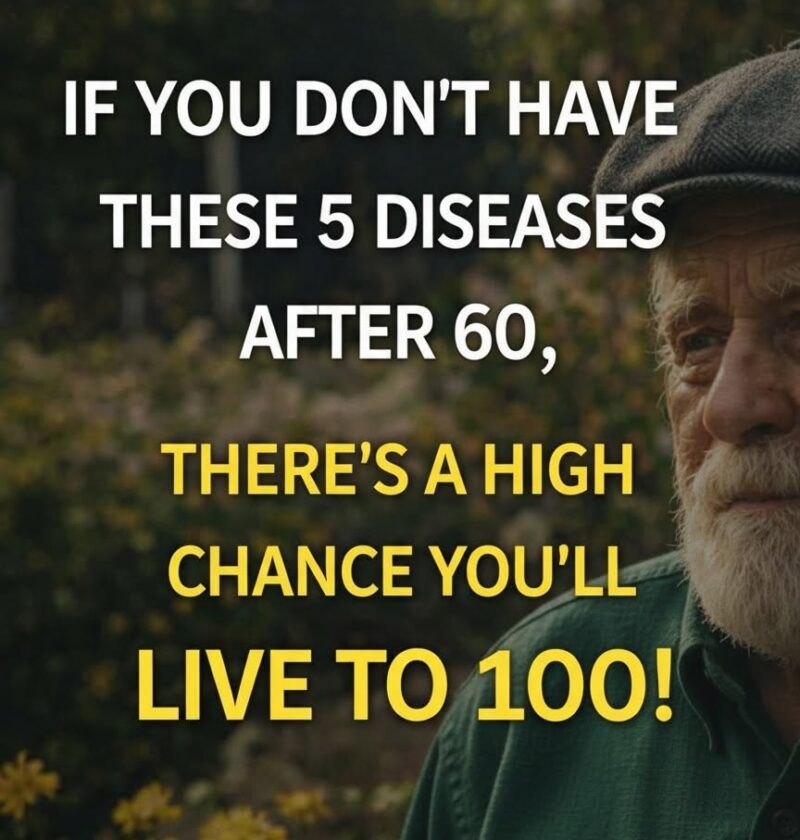
That headline is very misleading and oversimplified, even though it uses a real idea (healthy aging and disease prevention).
What’s true (in general science)
People who reach older age without major chronic diseases (like heart disease, diabetes, cancer, stroke, or severe lung disease) do tend to have:
- higher chances of living longer
- better quality of life
- lower risk of sudden health decline
So the general concept—“less disease = better longevity”—is correct.
What’s NOT true
- There is no reliable rule that “if you reach 60 without 5 diseases, you will likely reach 100”
- It is not a probability guarantee
- Longevity depends on many more factors than just 5 conditions
Why the claim is exaggerated
Life expectancy is influenced by:
- genetics
- lifestyle (smoking, diet, exercise)
- healthcare access
- infections and accidents
- mental health and stress
- environment
Even people with excellent health at 60 are not “likely” to reach 100 in a statistical sense—centenarians are still relatively rare.
A more accurate way to say it
A healthier version of that idea would be:
“People who avoid major chronic diseases by age 60 have a significantly higher chance of living longer than average.”
Bottom line
It’s not a prediction formula—it’s a general association, turned into a dramatic clickbait promise.
If you want, I can tell you the real strongest predictors of living into your 90s and beyond based on long-term studies.