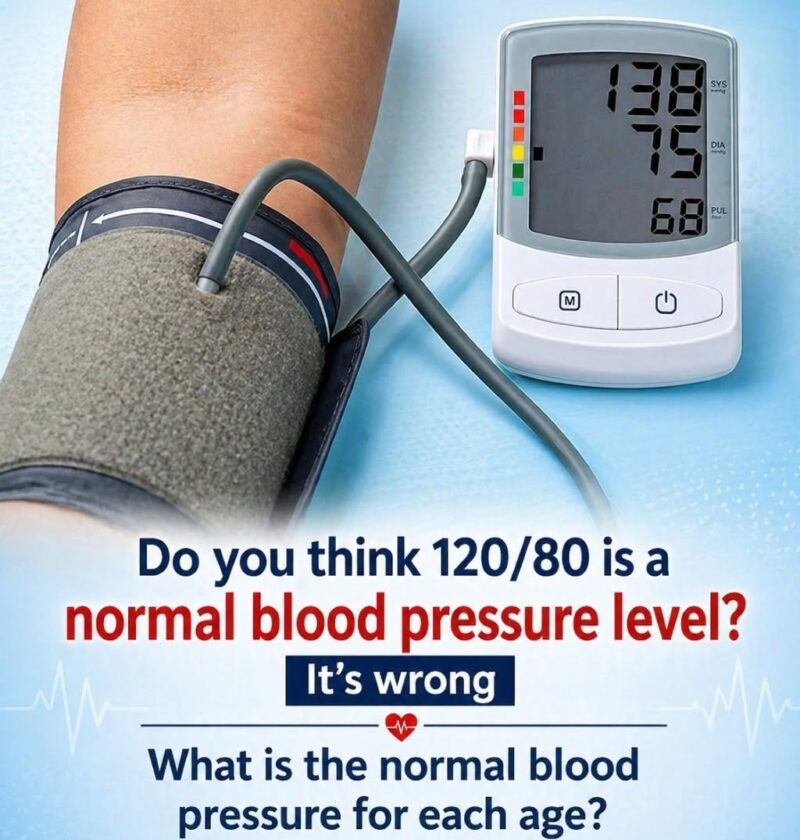
Normal Blood Pressure by Age
Blood pressure is usually measured in mmHg (millimeters of mercury) and written like:
120/80 mmHg
- Top number = systolic (pressure when heart beats)
- Bottom number = diastolic (pressure when heart rests)
General “Normal” Blood Pressure
For most adults (18–60+), the healthy range is:
- Normal: ~ 90/60 to 120/80 mmHg
- Elevated: 120–129 / less than 80
- High blood pressure (Hypertension): 130/80 or higher
Blood Pressure by Age (Typical Ranges)
Children (1–12 years)
- Usually lower than adults
- Rough range: 90/60 to 110/70 mmHg
Teenagers (13–17 years)
- Closer to adult levels
- Around: 100/65 to 120/80 mmHg
Adults (18–39 years)
- Ideal: 110/70 to 120/80 mmHg
Middle-aged adults (40–59 years)
- Slight increase is common
- Around: 110/70 to 130/85 mmHg
Older adults (60+ years)
- Often slightly higher due to stiffening arteries
- Around: 120/70 to 140/90 mmHg (depending on health status)
Important Notes
- “Normal” can vary slightly between individuals.
- One reading alone is not enough—doctors look at average readings over time.
- Lifestyle, stress, weight, and medical conditions can all affect it.
When to worry
- Consistently above 140/90 mmHg → high blood pressure
- Below 90/60 mmHg with symptoms (dizziness, fainting) → low blood pressure concern
If you want, I can also give you a simple chart showing safe vs dangerous levels or explain how to lower blood pressure naturally.