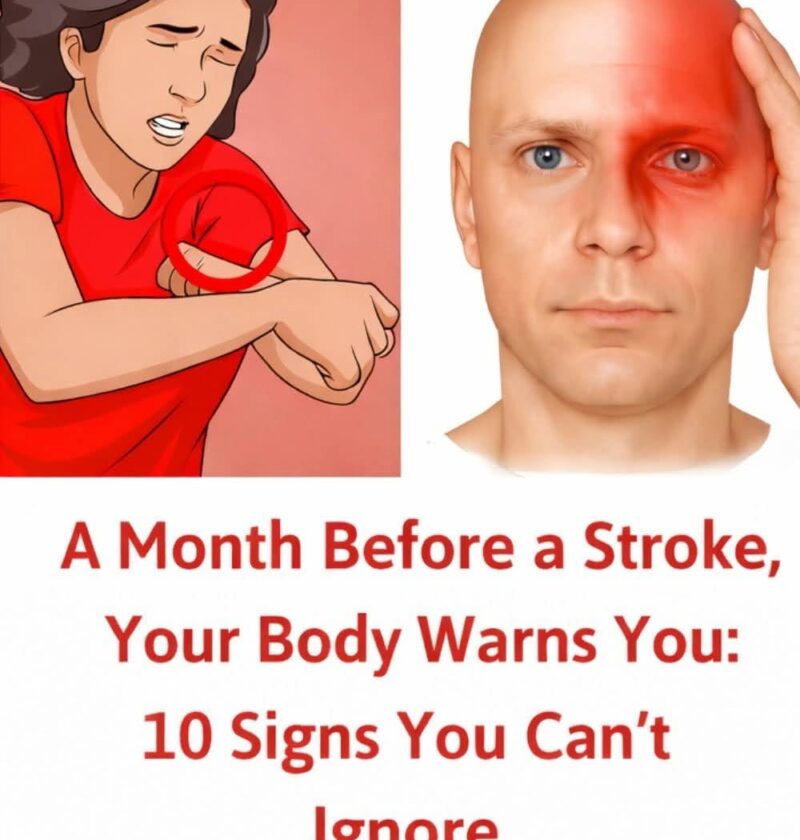
That headline is again clickbait-style. But unlike some internet myths, there is a real idea behind it: some people experience warning signs before a stroke, especially in the days to weeks leading up to a major event. However, it’s not reliable enough to predict a stroke a month in advance in every case.
Possible warning signs before a stroke (or “mini-stroke”)
1. Sudden numbness or weakness
- Especially on one side of the face, arm, or leg
2. Temporary vision problems
- Blurred vision or loss of vision in one eye
3. Speech or understanding issues
- Slurred speech or difficulty forming words
4. Dizziness or loss of balance
- Trouble walking or coordination problems
5. Brief “mini-strokes” (TIAs)
Transient Ischemic Attack
- These are very important warning events
- Symptoms are similar to a stroke but usually resolve within minutes to hours
- They are a major red flag for a future stroke risk
Important reality check
- A stroke often happens suddenly without long warning
- Some people have no symptoms beforehand
- TIAs are the closest thing to a “warning stroke,” but they don’t always occur
What actually increases stroke risk over time
- High blood pressure
- Diabetes
- Smoking
- High cholesterol
- Sedentary lifestyle
- Heart rhythm problems
When to act immediately (emergency signs)
Use FAST:
- Face drooping
- Arm weakness
- Speech difficulty
- Time to call emergency services
Bottom line
The body can sometimes give warnings, but there is no reliable “1-month countdown signal” for stroke. Many viral posts exaggerate this to get clicks.
If you want, I can explain how to reduce stroke risk in a practical way or what to do if someone is having a suspected TIA.