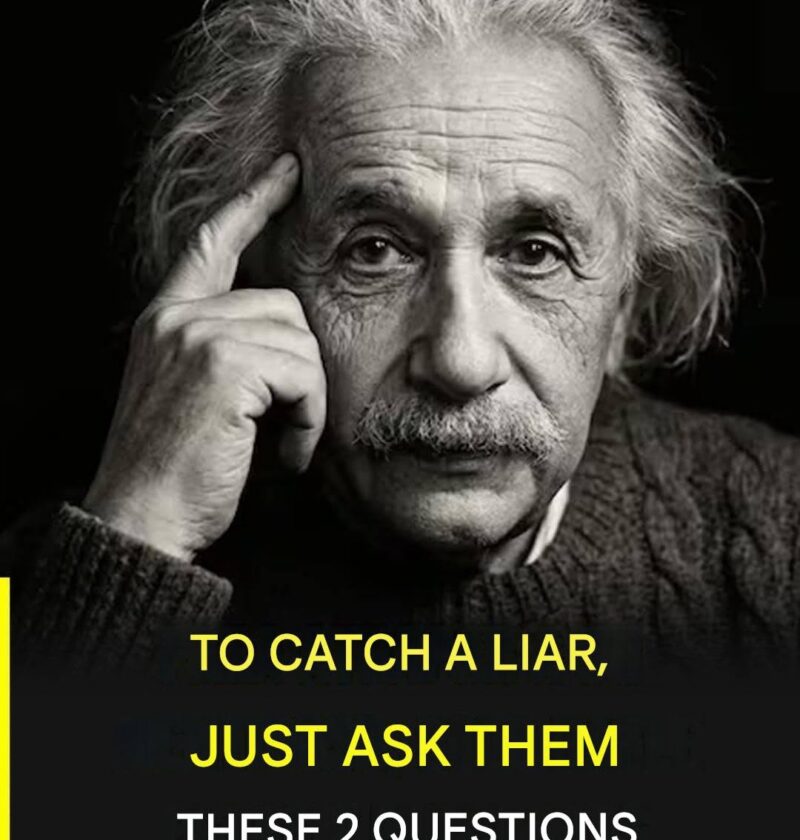
That headline is another overhyped “psychological trick” claim. There is no reliable pair of magical questions that can “catch a liar” in all cases. Real deception detection is much more complex—and even trained professionals are only moderately accurate.
That said, there are well-known questioning techniques used in psychology and investigative interviewing that can sometimes expose inconsistencies:
🧠 What actually works (in real research)
1. Asking for details in reverse order
People who are lying often rehearse a story in chronological order.
When asked to recount it backwards, they may:
- hesitate more
- make contradictions
- forget details
This is used in forensic interviewing, but it’s not foolproof.
2. Asking for unexpected detail expansion
Instead of “Tell me what happened,” ask:
- “What did you see/hear/smell at that moment?”
- “What happened right before and right after?”
Liars often prepare a basic script, not sensory detail.
3. Asking the same question later in a different way
Inconsistencies can appear when:
- wording changes
- time passes
- memory vs. fabrication conflicts show up
But honest people can also forget or misremember.
4. Strategic silence
Pausing after someone answers can make some liars feel pressure and add unnecessary details that may contradict earlier statements.
⚠️ Important reality check
There is:
- no “two question trick” that guarantees detection
- no facial expression or body language that proves lying
- no simple shortcut that replaces evidence or context
Even trained investigators rely on:
- evidence comparison
- timelines
- corroboration from multiple sources
🧩 Bottom line
The idea behind these posts is real psychology simplified into a viral oversimplification. Real lie detection is about patterns across many answers, not one clever question.
If you want, I can show you the most famous real interview method used by investigators (like the Cognitive Interview or Reid technique) and how it actually works in practice.