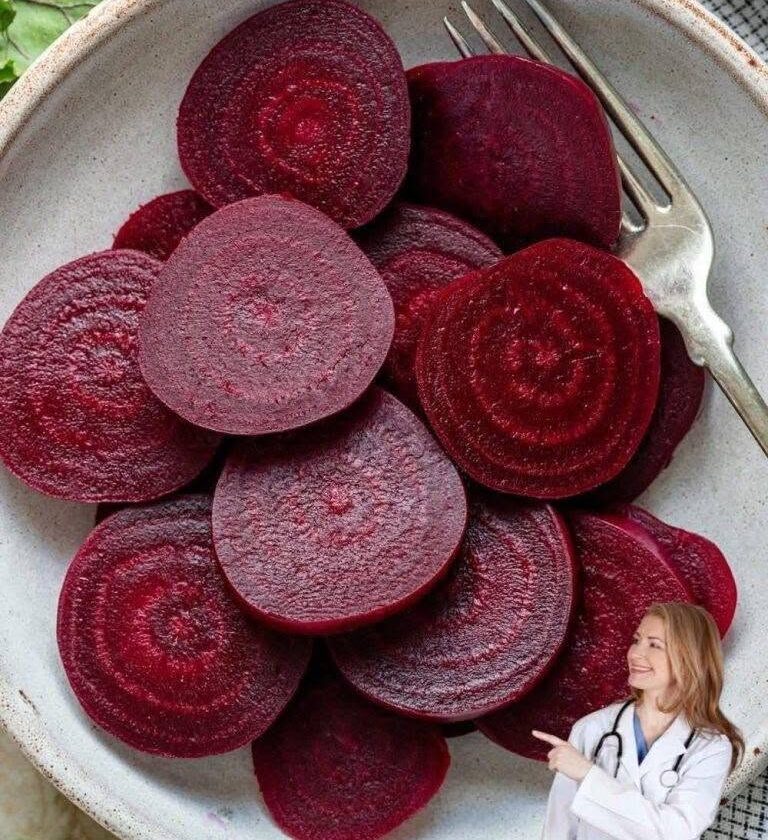
That’s a clickbait-style “health transformation” headline, but beetroot does have some real, evidence-based effects—just not the exaggerated “doctor mystery cure” framing.
🥗 What beetroot actually is
Beetroot is a nutrient-dense vegetable often studied for its effects on blood flow and exercise performance.
🧠 What actually happens when you eat it
❤️ 1. May support blood flow
Beetroot contains dietary nitrates that your body can convert into nitric oxide, which may help relax blood vessels and improve circulation.
🏃 2. Can improve exercise performance (mild effect)
Some studies show it may slightly improve endurance in certain people due to better oxygen use.
🩸 3. May help blood pressure (modest effect)
It can cause a small temporary reduction in blood pressure in some individuals.
🍽️ 4. Supports digestion
It has fiber, which helps gut health and regularity.
⚠️ Normal side effects (not dangerous)
- Red/pink urine or stool (“beeturia”)
- Mild stomach upset if eaten in large amounts
- Not suitable as a substitute for medical treatment
❌ What clickbait headlines exaggerate
They often imply beetroot:
- “cleans arteries instantly”
- “reverses disease”
- “replaces medication”
- “transforms your body overnight”
These are not supported by medical evidence.
🧾 Bottom line
Beetroot is a healthy food that may support blood flow, exercise performance, and digestion—but it is not a cure or dramatic “body reset” as clickbait posts suggest.
If you want, I can compare beetroot vs ginger vs garlic vs turmeric and show what each one actually helps with (no hype).