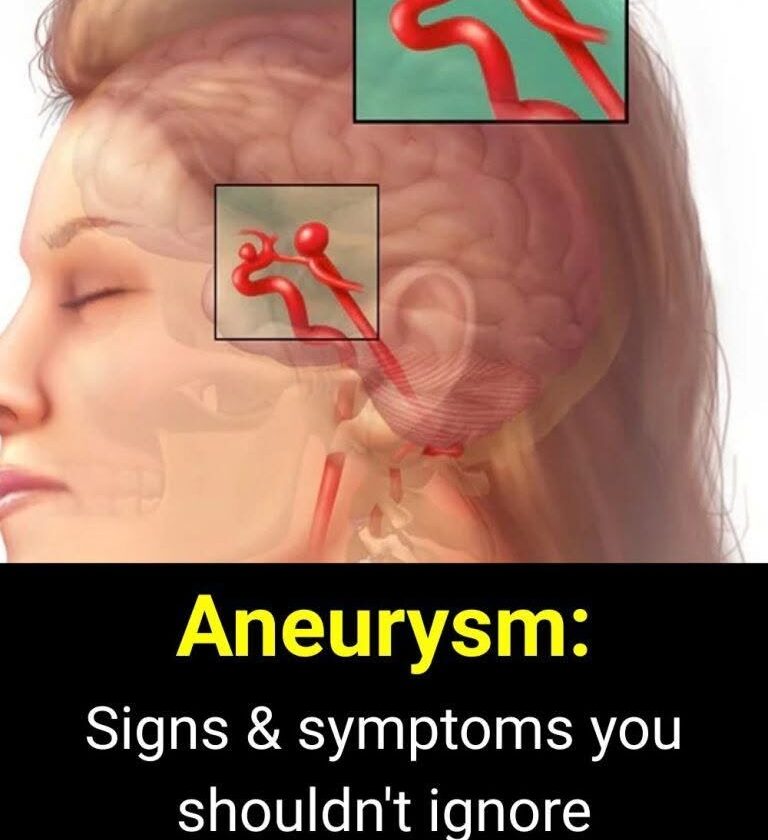
That headline is attention-grabbing but based on a real medical concern. The problem is that social media posts often oversimplify or exaggerate the warning signs.
Important signs of an aneurysm
Brain aneurysm (ruptured) – medical emergency
- Sudden, severe headache unlike any you’ve had before (“thunderclap headache”)
- Nausea and vomiting
- Stiff neck
- Sensitivity to light
- Blurred or double vision
- Confusion, seizure, or loss of consciousness
Abdominal aortic aneurysm
- Persistent or sudden severe pain in the abdomen, back, or side
- A pulsating feeling in the abdomen (not always present)
- If it ruptures: severe pain, dizziness, fainting, or signs of shock
Risk factors
Your risk is higher if you:
- Smoke or have smoked.
- Have high blood pressure.
- Are older.
- Have a family history of aneurysms.
- Have certain inherited connective tissue disorders.
When to seek emergency care
Call your local emergency services immediately if someone has:
- A sudden, extremely severe headache.
- Sudden severe chest, back, or abdominal pain with dizziness or fainting.
- Loss of consciousness or new neurological symptoms.
Bottom line
Many aneurysms cause no symptoms until they become large or rupture, so they can’t always be recognized from warning signs alone. A social media post claiming it can reliably identify an aneurysm from a few symptoms is oversimplifying a serious condition.
If you have the full article or a screenshot of the “See more” content, I can help separate accurate medical information from exaggerated or misleading claims.