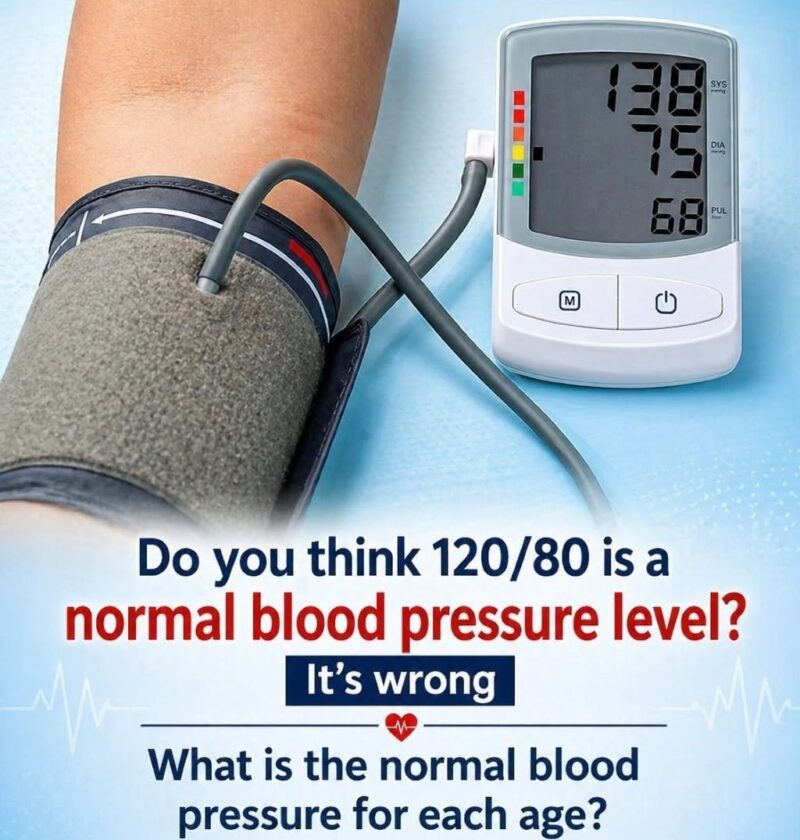
A common misconception is that there is a different “normal” blood pressure for every age. For most adults, the same general targets apply regardless of age, although your healthcare provider may set individualized goals based on your overall health.
Here’s a general guide for adults (18 years and older):
| Category | Blood Pressure (mmHg) |
|---|---|
| Normal | Less than 120/80 |
| Elevated | 120–129 systolic and less than 80 diastolic |
| Hypertension (Stage 1) | 130–139 systolic or 80–89 diastolic |
| Hypertension (Stage 2) | 140/90 or higher |
| Hypertensive crisis | 180/120 or higher (requires immediate medical evaluation, especially if symptoms are present) |
What about children?
Normal blood pressure in children does vary by age, sex, and height, so doctors use percentile charts rather than one fixed number.
Blood pressure changes with age
As people get older, blood vessels often become stiffer, making high blood pressure more common. However, aging itself does not make higher blood pressure “normal.” Maintaining a blood pressure below 120/80 mmHg, when safely achievable, is generally associated with lower cardiovascular risk.
Tips for an accurate reading
- Rest quietly for 5 minutes beforehand.
- Sit with your back supported and feet flat on the floor.
- Keep your arm supported at heart level.
- Avoid caffeine, smoking, or exercise for at least 30 minutes before measuring.
If you tell me your age and your blood pressure reading (for example, 128/78), I can help you interpret what it means.