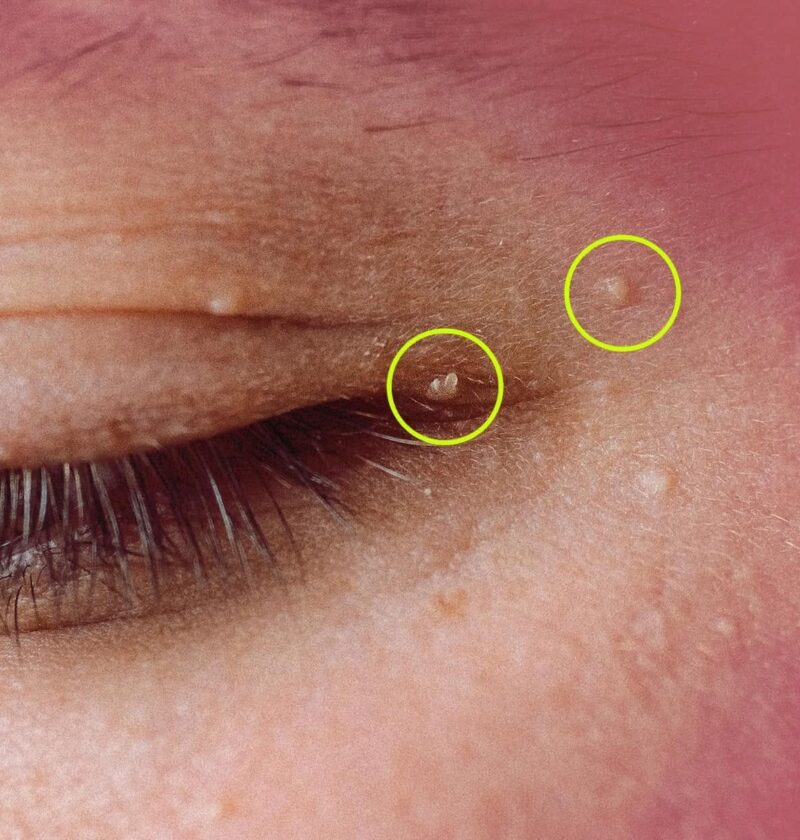
First, a small correction: milia are not actually “fat cysts.” They are tiny, firm, white or yellowish bumps that form when keratin (a skin protein) becomes trapped just beneath the surface of the skin.
What are milia?
Milia commonly appear:
- Around the eyes
- On the cheeks
- On the nose
- On the forehead
They are harmless and can occur in both children and adults.
How to get rid of milia
1. Don’t squeeze them
Unlike pimples, milia usually don’t have an opening to the skin surface. Squeezing can cause irritation, scarring, or infection.
2. Gentle exfoliation
Products containing ingredients such as:
- Salicylic acid
- Glycolic acid
- Lactic acid
may help promote skin turnover and reduce the formation of new milia.
3. Retinoids
Over-the-counter retinol or prescription retinoids can help increase cell turnover and may be useful for recurrent milia.
4. Professional removal
A dermatologist can safely remove milia using sterile techniques. This is often the fastest and most effective option for existing bumps.
When to see a dermatologist
Consider professional evaluation if:
- The bumps persist for months.
- They are spreading.
- You’re unsure whether they’re milia or another skin condition.
- Home skincare measures aren’t helping.
Prevention tips
- Use non-comedogenic skincare products.
- Remove makeup thoroughly.
- Avoid overly heavy creams if they seem to trigger milia.
- Wear sunscreen to protect skin from damage.
Bottom line
Milia are common, harmless keratin-filled cysts—not fat deposits. They often resolve on their own, but persistent milia can be treated with exfoliating skincare, retinoids, or simple in-office removal by a dermatologist.