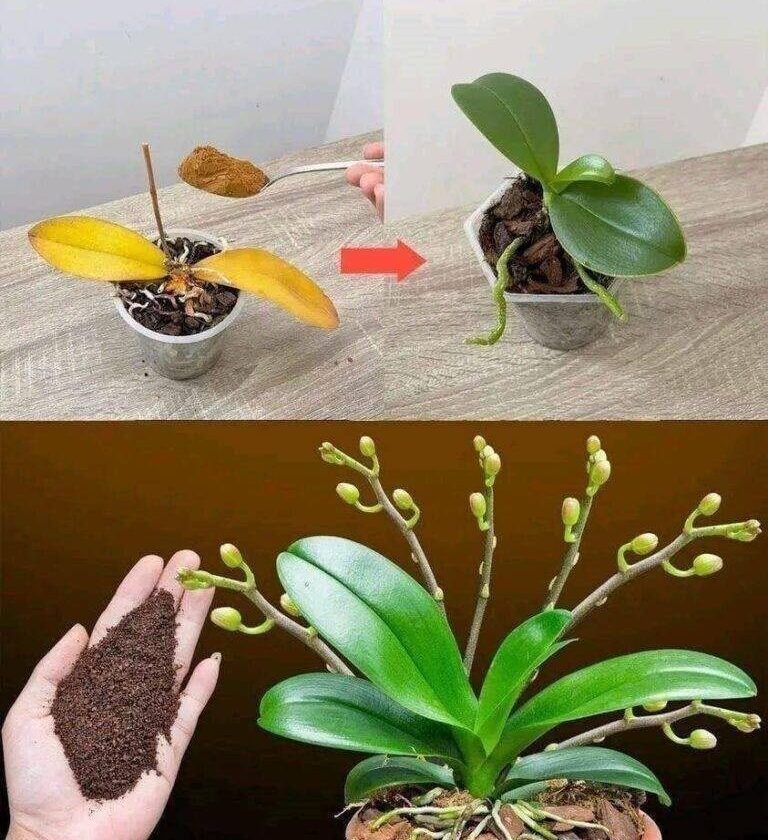
That “just a teaspoon and orchids explode with flowers” claim is a viral gardening myth, not something supported by plant science.
🌸 What actually happens with orchids
Orchids don’t bloom from a single ingredient. They flower when several conditions are right over time:
- enough bright, indirect light
- proper watering cycle (not overwatering)
- healthy roots and air circulation
- a small temperature drop at night (for many types)
- occasional diluted fertilizer
🧪 About the “teaspoon trick”
Online posts usually refer to things like:
- sugar water
- coffee
- milk
- banana water
- vinegar or aspirin solutions
But in reality:
- ❌ they do not trigger blooming
- ❌ they can cause mold or root rot if misused
- ❌ orchids don’t respond to “quick fixes” like that
🌿 Why orchids really bloom again
Most common house orchids (like Phalaenopsis) rebloom when:
- they get consistent light
- their roots stay healthy in airy bark mix
- they experience a slight temperature change between day and night
- they recover from stress and redirect energy into flowering
🌼 The real “secret”
There is no miracle teaspoon. The closest thing to a secret is:
consistent care + patience over weeks or months
💡 Simple tip that does help
If you want more blooms:
- use a very diluted orchid fertilizer (¼ strength) every 2–4 weeks during growth
- never overfeed
If you want, tell me what your orchid looks like right now (leaves, roots, whether it already flowered), and I can give you a step-by-step plan to actually trigger reblooming.