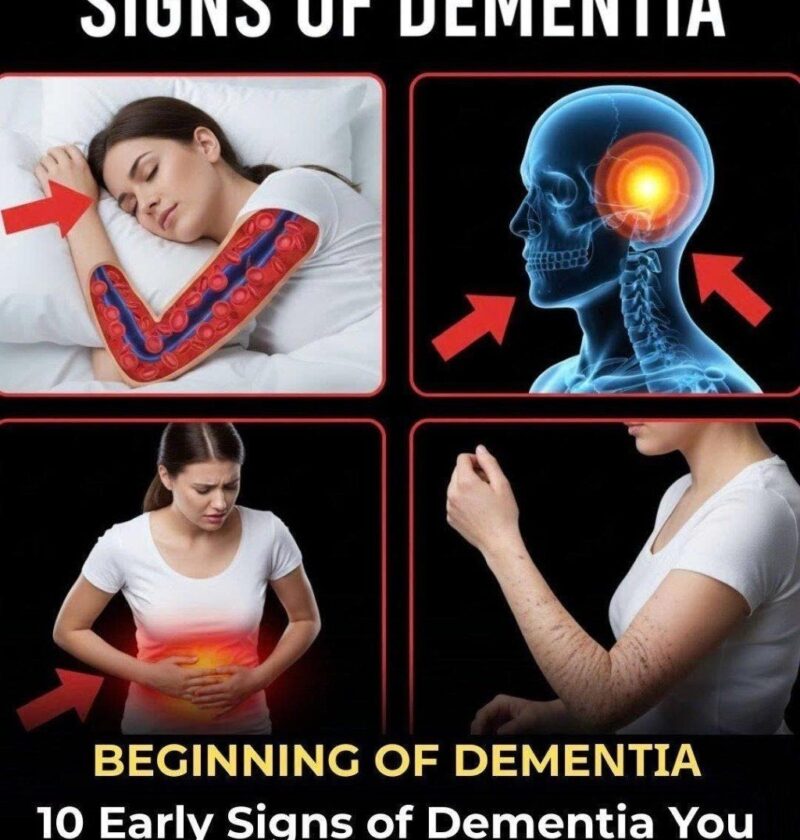
That headline is designed to sound urgent, but it oversimplifies things. Dementia is diagnosed based on a pattern of cognitive decline over time, not a single list of “never ignore” signs that automatically mean disease.
That said, there are early warning signs doctors do take seriously—especially if they are new, worsening, and affect daily life.
🧠 Early signs that may be associated with dementia
1. Memory loss that disrupts daily life
Forgetting recent conversations, events, or repeated questions.
2. Difficulty planning or solving problems
Trouble following steps, managing bills, or organizing tasks.
3. Confusion with time or place
Losing track of dates, seasons, or getting lost in familiar places.
4. Trouble with familiar tasks
Struggling with cooking, driving, or using familiar devices.
5. Word-finding problems
Pausing often or using incorrect words in conversation.
6. Poor judgment
Unusual decisions, especially around money or safety.
7. Misplacing things
Putting items in strange places and not being able to retrace steps.
8. Changes in mood or personality
Increased anxiety, irritability, suspicion, or withdrawal.
9. Reduced initiative
Loss of interest in hobbies, work, or social activities.
10. Difficulty understanding visual/spatial information
Problems reading, judging distance, or recognizing objects.
⚠️ Important reality check
These symptoms can also be caused by:
- stress or burnout
- depression or anxiety
- sleep deprivation
- medication side effects
- vitamin deficiencies (like B12)
So symptoms alone do not equal dementia.
🧠 When doctors get more concerned
They look for:
- gradual worsening over time
- multiple cognitive areas affected
- clear impact on independence
💡 Key takeaway
Early signs are about consistent decline in thinking and daily function, not occasional forgetfulness or normal aging.
If you want, I can break down the difference between normal aging vs dementia memory loss, which is where most people get confused.