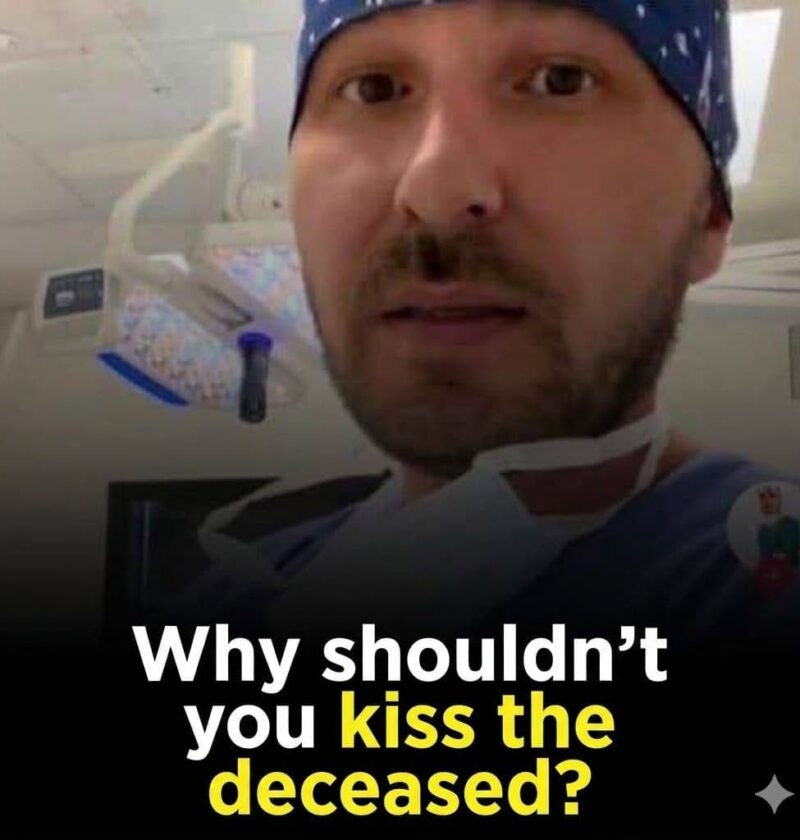
That headline is written to sound dramatic, but the real reason behind medical advice on this topic is simple hygiene and infection control—not anything emotional or “forbidden.”
🧠 Why doctors may advise against kissing a deceased person
After death, the body naturally begins to change. Medical professionals may discourage close contact (including kissing) mainly because of:
🦠 1. Risk of infection (low but not zero)
In most cases, the risk is very low, but caution is advised if the person died from:
- Tuberculosis
- Certain viral infections
- Severe bacterial infections
- Untreated contagious diseases
Some germs can survive for a short time after death, especially in bodily fluids.
⚗️ 2. Natural post-death changes
After death, the body undergoes:
- Cooling and stiffening (rigor mortis)
- Skin and tissue changes
- Possible leakage of fluids in some cases
These changes are natural but can make close contact unhygienic.
🧼 3. Hygiene and public health standards
Hospitals and mortuaries follow protocols to:
- Protect grieving family members
- Prevent unnecessary exposure
- Maintain safe handling procedures
This is especially important if the cause of death is unknown.
❤️ 4. Emotional and psychological reasons (also important)
Some professionals gently discourage close physical contact because:
- It can be emotionally distressing
- Some people later find it traumatic
- Cultural practices vary widely, so families are guided carefully
🧠 Important truth
- There is no universal rule that kissing a deceased loved one is “dangerous”
- Many cultures and religions allow it as part of mourning rituals
- Medical advice depends on cause of death and situation
✔️ Bottom line
Doctors don’t discourage it to be harsh—they do it to balance:
respect for the deceased + emotional comfort + basic hygiene safety
If you want, I can explain how different cultures around the world handle viewing and farewell rituals, because practices vary a lot and are actually very interesting.