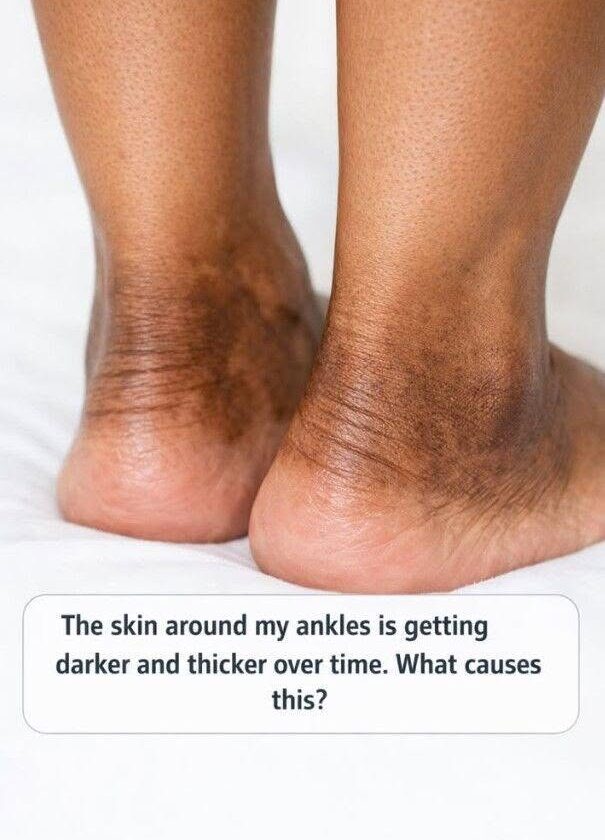
Darkening and thickening of the skin around the ankles is fairly common, and it usually points to an underlying irritation, circulation issue, or skin condition rather than something superficial.
Here are the most common causes:
🩸 1. Poor circulation (very common)
When blood flow in the lower legs is not efficient, pressure builds up in the veins.
This can cause:
- Brownish or dark discoloration
- Thickened, “leathery” skin over time
- Mild swelling around ankles
This is often linked to venous insufficiency.
🦶 2. Repeated friction or pressure
Simple mechanical irritation can gradually change skin texture:
- Tight socks or shoes rubbing the area
- Frequent scratching
- Standing for long hours
This leads to:
- Skin thickening (lichenification)
- Darkening due to repeated inflammation
🌿 3. Eczema or chronic skin irritation
Long-term eczema or dermatitis can cause:
- Dark patches
- Dry, thickened skin
- Itching (sometimes mild or ongoing)
Scratching worsens the discoloration.
🧬 4. Insulin resistance or metabolic issues (less obvious but important)
In some people, especially with weight gain or diabetes risk:
- Skin can become darker in folds or lower legs
- Often accompanied by other body areas being affected (neck, armpits)
🧴 5. Post-inflammatory hyperpigmentation
After:
- Minor injuries
- Insect bites
- Rashes
Skin can remain darker for a long time, especially on lower legs.
⚠️ When it needs attention
You should consider seeing a doctor if you also notice:
- Swelling in ankles or legs
- Pain, heaviness, or visible veins
- Rapid spreading of darkening
- Open sores or slow-healing skin
These can suggest circulation-related issues that may need treatment.
🧠 Bottom line
Dark, thick ankle skin is most often due to:
circulation problems + chronic irritation, not a single skin defect.
If you want, you can tell me:
- whether it itches
- if your ankles swell
- how long it’s been happening
and I can help narrow down the most likely cause more accurately.