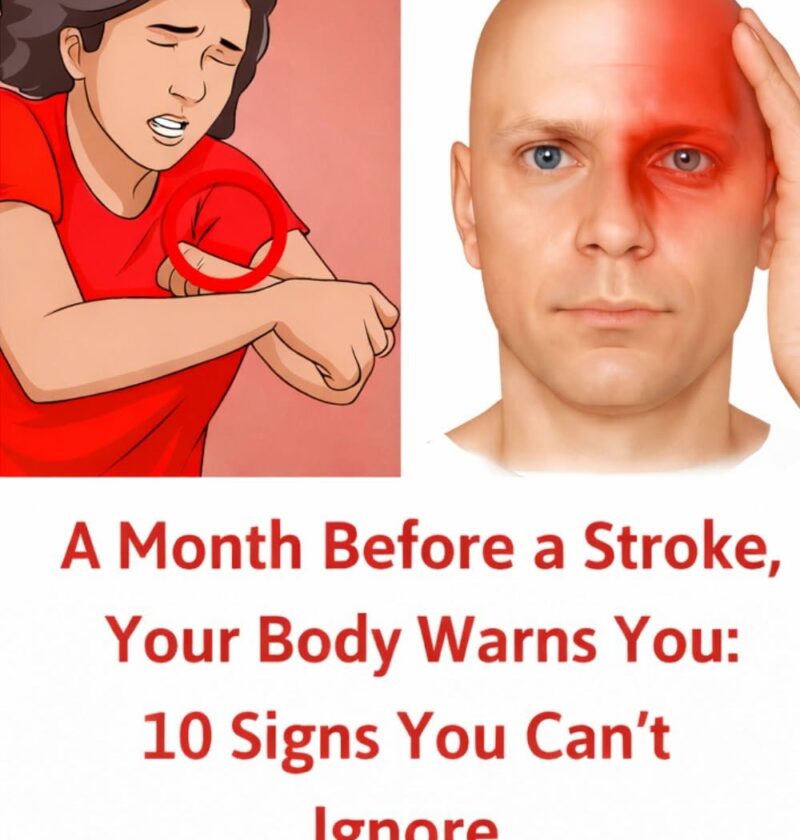
That headline is clickbait. It mixes a real medical topic (stroke) with an exaggerated idea that there are always “10 clear warning signs a month before.” That’s not how strokes usually work.
🧠 The reality about stroke warning signs
A stroke often happens suddenly, without a long predictable warning period. However, some people may experience transient ischemic attacks (TIAs) or subtle risk symptoms beforehand.
⚠️ Possible early warning signs (not guaranteed a month before)
FAST symptoms (most important)
- Face drooping
- Arm weakness
- Speech difficulty
- Time to call emergency help
These are usually sudden, not gradual.
Other possible warning signs (especially with TIAs)
- sudden brief weakness or numbness (face, arm, or leg)
- temporary vision loss or blurred vision
- dizziness or loss of balance
- confusion or trouble speaking
- severe unexplained headache (less common)
⚠️ TIAs can last minutes to hours and then resolve—but they are serious warning events, not “minor episodes.”
🚨 Important reality check
- There is no reliable “10-sign checklist” that predicts a stroke a month in advance
- Many strokes happen without any noticeable warning
- Risk builds over time due to factors like:
- high blood pressure
- diabetes
- smoking
- heart disease
- high cholesterol
🟢 Bottom line
These posts are designed to sound precise and scary, but medically:
stroke warning signs are usually sudden, not a predictable 10-step early list.
If you want, I can explain:
- how to actually reduce stroke risk in a practical way
- or how to tell stroke vs less serious symptoms quickly in real life