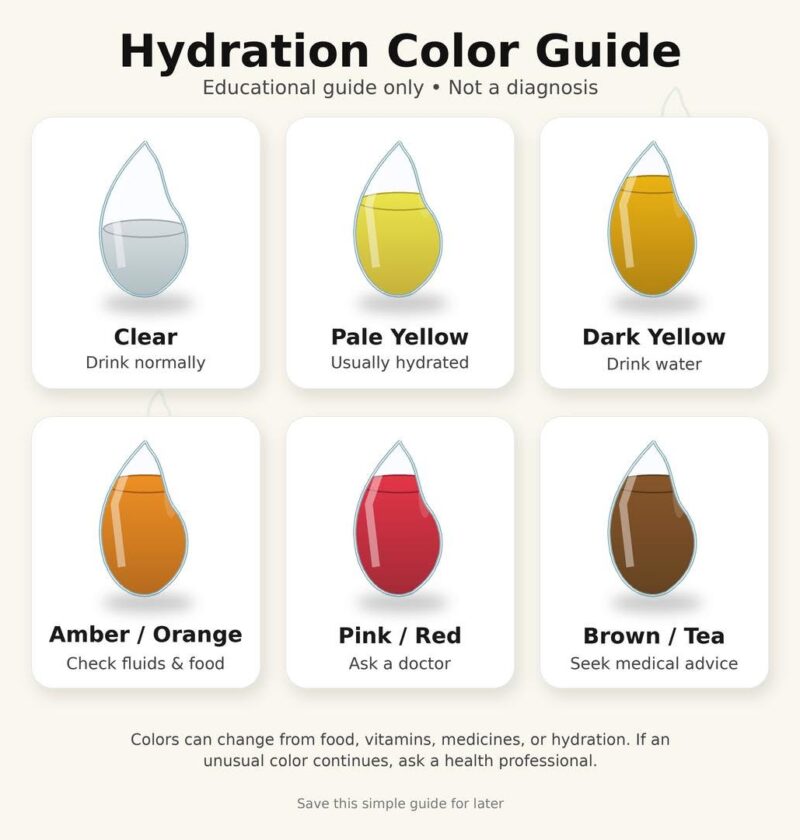
A urine color guide can be useful as a general indicator, but color alone can’t diagnose a medical condition.
Common urine colors and what they may mean
| Color | Possible meaning |
|---|---|
| Clear | Very well hydrated; sometimes drinking more fluid than needed |
| Pale yellow | Usually normal and healthy hydration |
| Dark yellow / Amber | Often dehydration |
| Orange | Dehydration, vitamins (especially B vitamins), or some medications |
| Pink / Red | Foods like beets can cause this; blood in the urine is another possibility and should be checked |
| Brown / Cola-colored | Severe dehydration, certain medications, or liver/muscle-related conditions |
| Green / Blue | Food dyes, supplements, or some medications; less commonly a medical issue |
| Cloudy / Milky | Crystals, minerals, or a possible urinary tract infection |
When to seek medical advice
Contact a healthcare professional if you have:
- Red or bloody urine without an obvious food cause
- Brown urine that persists
- Pain or burning when urinating
- Fever, back pain, or other urinary symptoms
- Sudden, unexplained color changes that don’t go away
A simple rule of thumb
For most healthy people, pale yellow to light gold is generally the target range for hydration.
Keep in mind that foods (beets, berries), supplements (especially B vitamins), and medications can change urine color without indicating a health problem. If a color change is persistent or accompanied by symptoms, it’s worth getting checked.