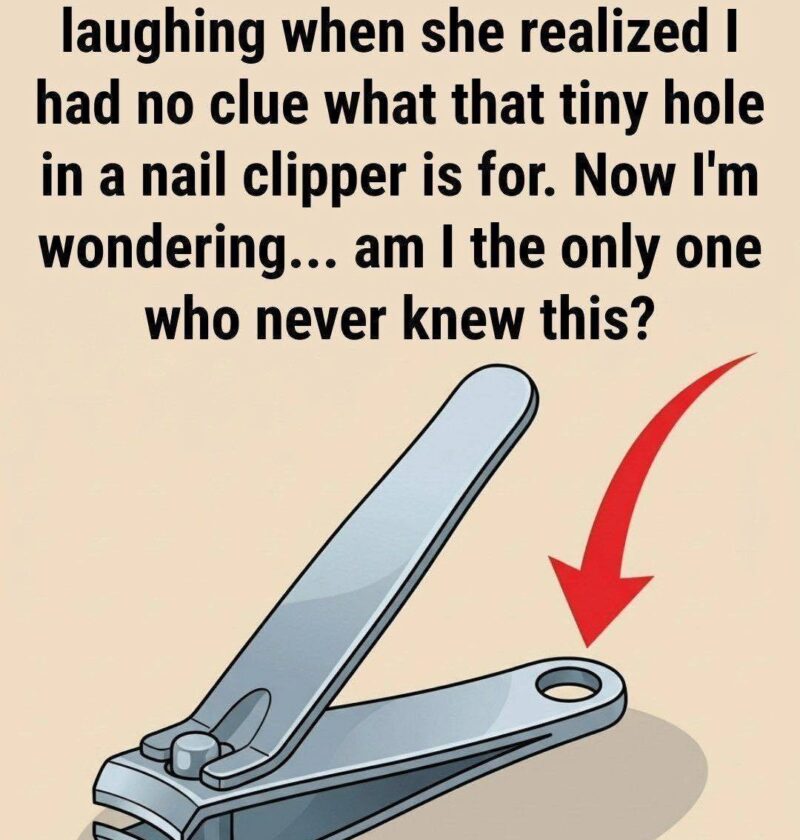
That “small round hole” on your nail clipper isn’t just decoration—it actually has a few practical (and historical) purposes that still matter today.
✂️ 1. It was originally designed for a key ring or chain
One of the most common uses is simple:
- The hole lets you attach the clipper to a keychain, hook, or bathroom kit
- This was especially useful when nail clippers were part of travel grooming sets
Back when grooming tools were carried together, this helped keep everything organized and easy to find.
🧰 2. It helps with manufacturing and alignment
During production:
- The hole can be used to hang the clipper during coating or polishing
- It also helps with assembly and quality control alignment
So it’s useful even before the product reaches you.
🧷 3. In some designs, it improves leverage or structure
On certain models:
- The metal shape around the hole can slightly help with tension distribution
- It can also reduce unnecessary metal weight without weakening the tool
🧠 4. A leftover from older multi-tool designs
Early grooming kits often combined:
- Nail file
- Cleaner tool
- Small scissors or clippers
The hole helped connect or store them together, and the design carried over even as tools simplified.
🟡 Does it still matter today?
Yes—but mostly in a small way:
- ✔ Useful for hanging or storage
- ✔ Helpful in manufacturing
- ❌ Not essential for clipping nails
Modern clippers would still work perfectly without it, but removing it would mean redesigning manufacturing tools and traditions.
✂️ Bottom line
That tiny hole is a legacy feature—part practical utility, part manufacturing convenience, and part design history that stuck around because it still kind of helps.
If you want, I can explain other “hidden features” in everyday objects (like scissors, rulers, or bottle caps).