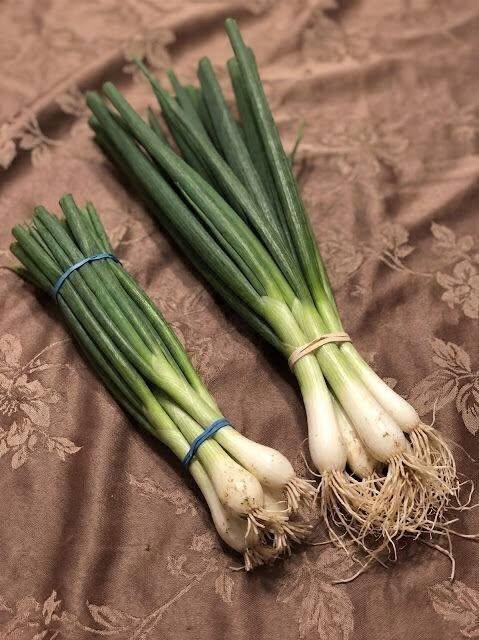
You weren’t wrong—this is mostly a language/usage confusion, not a real “wrong ingredient” situation.
🧅 Are green onions and scallions different?
In most places, especially in the U.S. and many international recipes:
👉 Green onions = scallions = same thing
Scallion
Green onion
They are both:
- the same plant (young onion)
- harvested early before forming a full bulb
- used for mild onion flavor
🌍 Why the confusion happens
Different countries and people use different names:
- U.S.: scallions and green onions are used interchangeably
- UK/Commonwealth: “spring onions” is more common
- Some markets: may label thicker ones as spring onions and thinner ones as scallions
Sometimes sellers or individuals also treat them as slightly different based on size, but botanically they’re essentially the same stage of onion growth.
🧠 Why your mother-in-law might have objected
If someone insists they’re different, they’re usually:
- used to a regional naming system
- expecting a specific thickness or maturity level
- or just being particular about presentation, not actual flavor
But culinarily, they’re interchangeable in most recipes.
🧾 Bottom line
Yes—what you bought (scallions) are effectively the same as green onions in cooking. The disagreement is about naming and preference, not a real ingredient difference.
If you want, I can also explain the only situation where scallions vs spring onions actually matters in cooking (there is a small difference in texture).