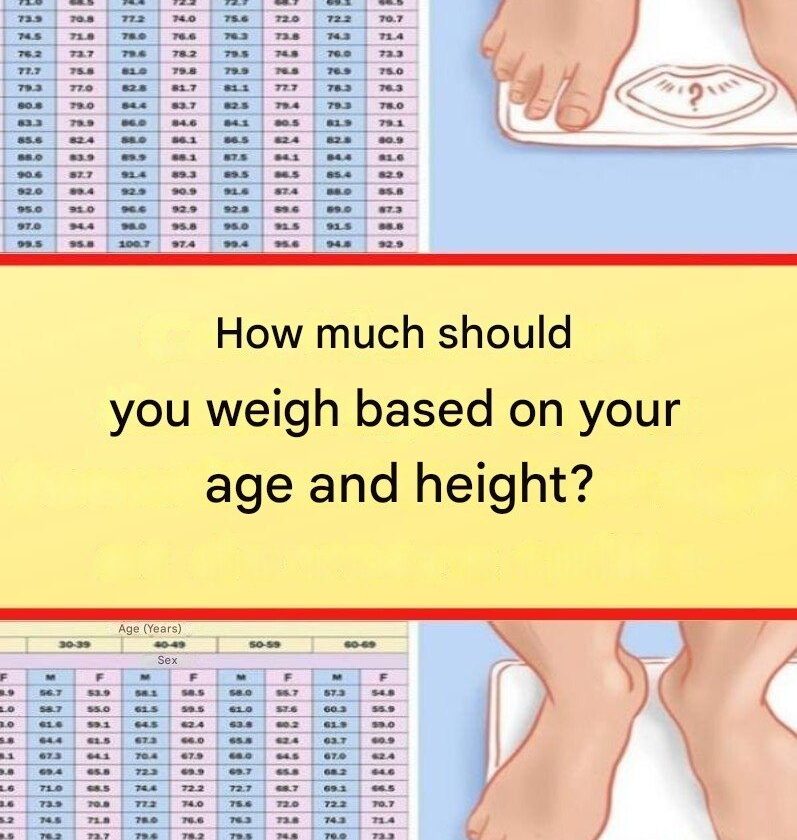
What you pasted is mostly correct in a general sense, but it’s also a bit oversimplified.
📏 What BMI actually does
Body Mass Index (BMI) is a quick screening tool that estimates whether a person’s weight is in a “healthy range” for their height:
BMI = \frac{\text{weight (kg)}}{\text{height (m)}^2}
🧠 Important limitations of BMI
BMI is widely used, but it has clear limits:
- It doesn’t measure body fat directly
- It doesn’t distinguish muscle from fat
- It may misclassify:
- muscular people (can appear “overweight”)
- older adults (may underestimate fat levels)
- It doesn’t account for fat distribution (belly fat vs overall)
📊 General BMI categories (adults)
- Under 18.5 → underweight
- 18.5 – 24.9 → “normal” range
- 25 – 29.9 → overweight
- 30+ → obesity
⚠️ Why “ideal weight” is not one fixed number
A healthy weight depends on:
- Muscle mass
- Bone structure
- Age
- Genetics
- Activity level
- Overall health markers (blood pressure, glucose, fitness)
So two people with the same height can both be healthy at different weights.
🟢 Bottom line
BMI is a useful screening tool, not a perfect measure of “ideal weight.” Real health is better judged by a combination of body composition, fitness, and medical indicators—not a single number.
If you want, I can calculate a healthy weight range for your height and explain what it means in a more personalized way.